

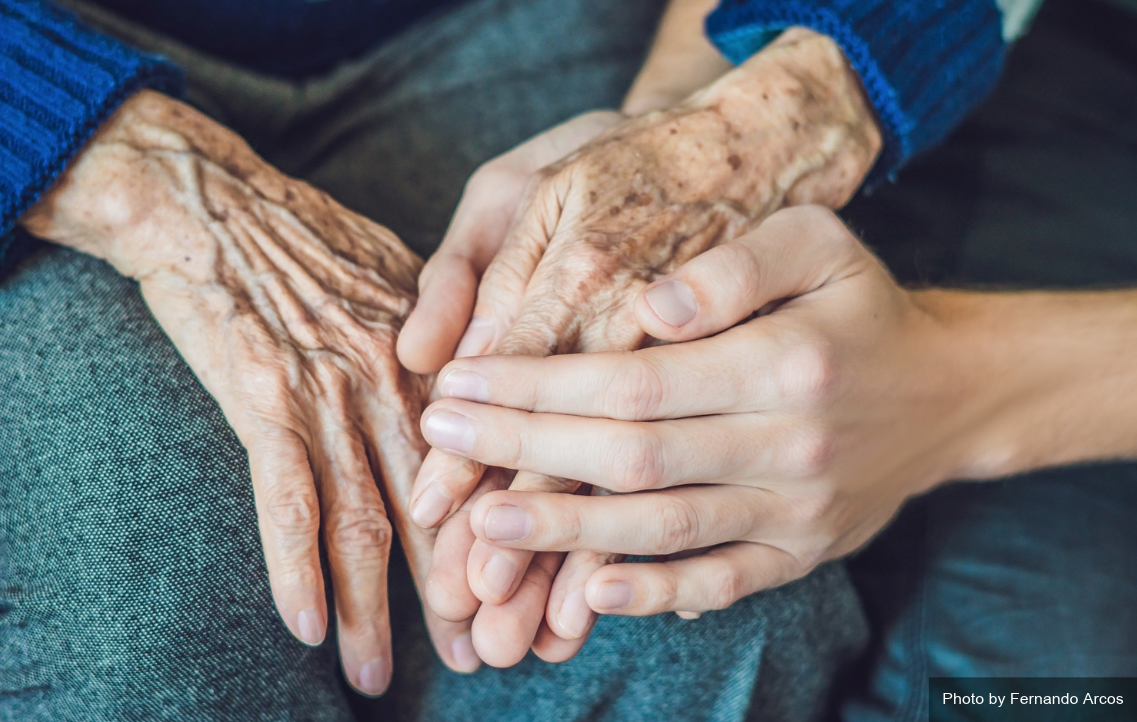
Madam Tan is 78 and lives alone in Hougang. Every afternoon, she takes the lift down to the void deck, where the same few neighbours are usually sitting. They are not friends, exactly. She could not tell you the name of the man who always takes the corner seat. But if she does not appear by four o’clock, someone will ask after her, and if she falls ill, someone will know which of her children to call. Nobody arranged this. No one is her caregiver. Yet for the hours she spends there, she is looked after.
Singapore’s ageing system is increasingly good at making sure that seniors are reached by Silver Generation Ambassadors, as well as more than 230 Active Ageing Centres, befrienders and monitoring services. These efforts matter. But reaching a senior is not the same as reducing isolation. The harder question is what happens after contact: do seniors remain recipients of organised support, or do relationships develop in which care begins to pass between them?
Care beyond services
Public debate about care in Singapore tends to focus on care provision: who qualifies for home-based services, how to support caregivers, how to finance long-term care. These do matter, but they begin from an image of care as a task to be assigned and a service to be delivered. Someone gives; someone receives.
Ties between neighbours, regulars and acquaintances work differently. When neighbours sit under the same void deck fan to pass the time, or find themselves brisk walking at the same hour, no one is formally the carer or the cared-for.
Yet through repeated encounters, people come to recognise one another, notice absences and offer help when something goes wrong. In our recent study published in the journal Dialogues in Human Geography, we call this “care-with” as opposed to “care-for”: care that arises through mutual presence, rather than being delivered by an assigned provider.
These ties are not a substitute for family or formal services. For many older adults, they provide regular company and an informal layer of support. Often, their value lies less in closeness than in predictability. Madam Tan need not know the man in the corner seat well. What matters is that they see each other often enough for her absence to register.
A senior may be reached by an ambassador, contacted by a befriender, or attend an activity every week, yet remain in the position of someone receiving support. Repeated contact matters, but the further question is whether participants also begin to recognise one another, notice absences and offer help when needed.
What are the programmes for?
Much of Singapore’s response to social isolation is organised through contact. Seniors are reached, referred to Active Ageing Centres, matched with befrienders and encouraged to join programmes.
In an October 2025 parliamentary reply on how Age Well SG assesses social isolation and progress in reducing it, the Ministry of Health said that attendance and outreach can be monitored operationally, while longer-term programme effects would be examined through research.
Research matters, but programmes funded partly to reduce isolation should also show whether relationships have formed. A programme can fill every seat while leaving each participant a separate beneficiary. This may provide company, exercise, useful information and access to formal support, but these should not be treated as evidence that social connection has taken root.
If reducing isolation is part of a programme’s purpose, the question cannot end with how many people attended. It must also ask what developed between them.
Designing for more than contact
Taking friendship seriously as care does not mean asking the government to assign friends. It means expecting programmes to enable more than contact.
The first is to change how programmes are designed. If every interaction remains between staff or volunteers and individual beneficiaries, a programme may provide care without enabling care between participants. Programmes should give participants repeated opportunities to encounter the same people, time to talk before and after activities, and room to initiate gatherings of their own. The aim is not only to deliver an activity, but to create conditions in which peer relationships can develop and continue beyond it.
The second is to change what we count. Attendance is useful as a measure of reach, but it is not the whole outcome. For programmes intended to reduce isolation, one important outcome would be whether participants begin to show up for one another beyond what the programme asks of them. Do the participating seniors stay on after the session ends? Do they meet on their own? Do they exchange small forms of help or notice when one of them stops coming?
Such signs are harder to record than attendance, but they can be assessed without turning intimacy into another key performance indicator. The point is to distinguish a well-attended programme from one that has gone on to help participants to develop peer relationships.
The third is to tap into the ordinary spaces where relationships already form and continue. A relationship may begin at an Active Ageing Centre, but it may just as readily emerge at a bench, coffeeshop, pavilion, or fitness corner. Under Age Well SG, providers already deliver programmes in communal spaces. But taking programmes outside centres does not go far enough. Providers also need to support the informal connections that develop through seniors’ everyday routines, especially among those who do not join organised activities.
Providers should protect some staff time so that they can return without a programme to deliver and respond to what emerges, whether by making introductions, following up on residents’ ideas or helping a new connection continue.
The way staff time is structured within Open Government Products, a team under GovTech, offers a useful precedent. Each January, officers set aside non-core work to speak with users, test ideas, and tackle public problems, through Hack for Public Good.
Ageing providers could similarly set aside time for relational work in ordinary places, giving staff room to act on the small openings through which people begin to know and to look out for one another, even when no organised activity follows.
This is especially important for seniors who may not join organised programmes. In our research, older men were generally more reluctant to take part in organised activities because they did not want to be identified as lonely, vulnerable or in need of help. Informal gathering places allowed them to maintain social contact on their own terms and retain a sense of autonomy.
A group of coffeeshop regulars may look unremarkable, but it may also be an informal network in which absences are noticed. Recognising these patterns can help programme providers work with existing connections and help planners avoid disrupting them when common spaces are changed.
A “care-with” lens also widens where we see care because it begins with what people come to do for one another, rather than with places formally designed to provide care.
A library is not ordinarily counted as care infrastructure. Yet for someone who returns regularly, it may offer familiar faces, routine, and what geographer Sophie Bowlby calls “existential security”. When repeated presence becomes recognition, and recognition becomes concern, care has emerged even though no care programme was intended.
The spirit of care-with lies precisely in making such relationships visible. It asks not only what a place or programme delivered, but whether people became known, missed and eventually able to show up for one another.
None of this means treating neighbours as substitute caregivers. A kopi kaki is not a nurse, and informal concern cannot replace professional support. Formal services provide professional care and practical assistance; everyday relationships add company, recognition, and the reassurance that one’s absence may be noticed.
Singapore is building for longer lives and smaller households. Friendship cannot be delivered as a service. But programmes intended to reduce isolation should be judged not only by the contact they provide, but also by what develops through that contact. Do people become familiar, notice one another and eventually show up for one another? We should also look beyond programmes to the ordinary places and routines where such care may already be emerging.
Madam Tan lives by herself, but at four o’clock she is not alone.
Grace En Ying Chan is economist at the Asian Development Bank. Her research examines how social networks, everyday places, and social infrastructure shape care among older adults. Elaine Lynn-Ee Ho is Provost’s Chair Professor at the Department of Geography and Research Leader of the Migration and Mobilities Cluster at the Asia Research Institute. Her research examines the geographies of citizenship through studying various transnational migration streams, as well as the ageing and wellbeing of non-migrant and migrant older adults.