

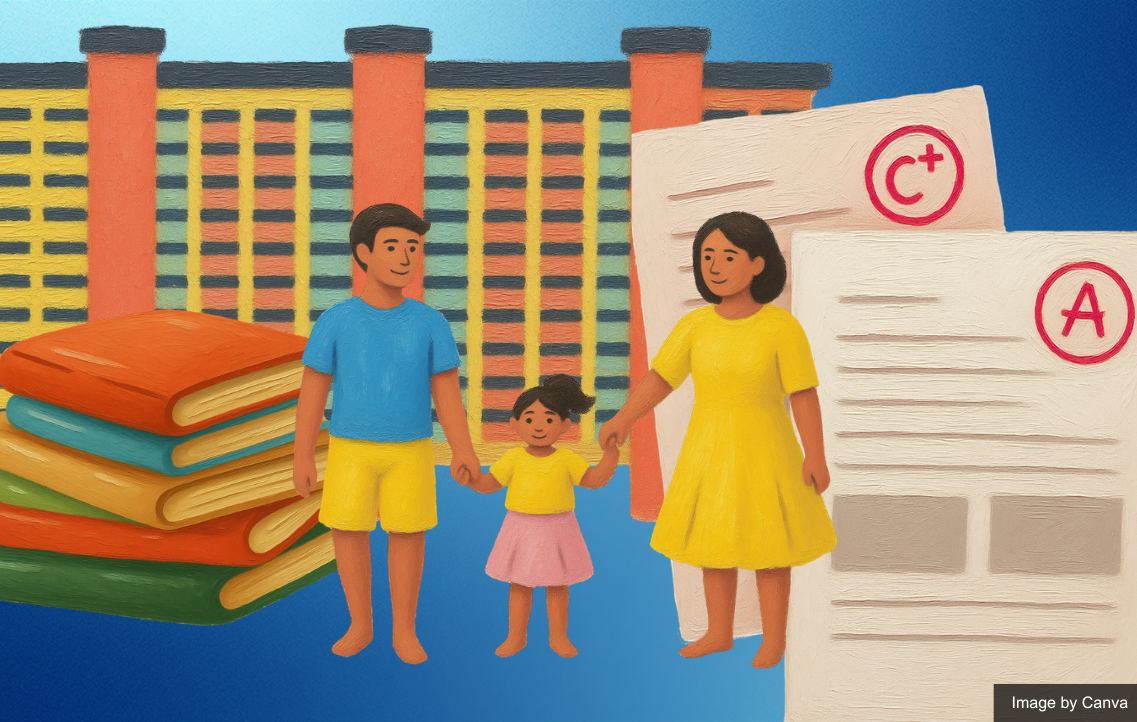
SINGAPORE: In Singapore, much has been said about the need to break away from an education “arms race”.
This was reiterated by Education Minister Desmond Lee in parliament this month, when he cautioned that a fixation on grades can pit children against one another, diminish their joy of learning and crowd out character-building.
Mr Lee’s remarks reaffirm efforts that the Ministry of Education has pursued for more than a decade – including doing away with mid-year examinations, softening labels of giftedness or academic excellence or lack thereof, and dampening obsession with “top” schools – in hope that the anxiety and stress experienced by parents and students would recede. The ministry is also studying how to further reduce the stakes of examinations.
The key point, however, is this: Lowering stress involves more than adjusting milestones. It also means changing the incentive environment around them, so families feel they can step off the treadmill without taking an irreversible risk.
WHEN EDUCATION MEETS BEING “KIASU”
But why are people on the treadmill in the first place? Findings from the recent IPS-CNA national identity study suggest something deeper may be at work.
When 2,000 Singapore residents were asked what traits define a Singaporean, the two most common responses were, surprisingly, not Singlish or our local food culture.
Instead, they were “valuing education” and “being kiasu”. The latter, according to those who participated in the study, was a negative identity marker.
If these are traits that sit near the centre of how we imagine a “typical Singaporean”, then the schooling, tuition and education arms race that have been widely debated in the public sphere are not only behaviours to be corrected. It is also part of an identity system, reinforced through everyday decisions and social expectations. This also helps explain why well-intentioned messaging, such as the idea that “every school is a good school”, may have struggled to shift lived realities.
EDUCATION AS INSURANCE, NOT STATUS
It is easy to assume that parents hanker after brand-name schools mainly because they are status-conscious or competitive. But there is a more psychologically honest explanation – for many, school choice is about managing risk and fulfilling responsibility.
Kiasu-ism is hence a way in which parents seek security for their child’s future and moral adequacy for themselves. In a way, schooling functions like insurance, where families hedge against regret and try to reduce uncertainty about what feels like an irreversible loss.
Take the tight competition for popular schools as an example. The explanation for this does not simply involve kiasu parents, but also perceived differences in attractiveness tied to autonomy, awards, Special Assistance Plan status, co-curricular offerings, as well as differences in resources.
If parents believe some schools offer better environments, stronger networks or smoother pathways, chasing them becomes a rational response.
When education functions like insurance, families who can afford more coverage will buy it for reassurance, alongside embracing private tuition, Direct School Admission preparatory classes and other avenues to improve the chances of getting a child admitted into a brand-name school.
However, when reassurance has a monetary cost, inequality deepens quietly because the ability to buy certainty becomes another layer of advantage, and stress is not shared evenly across families.
This identity lens also explains a familiar frustration: When competition is reduced in one visible area, it reappears elsewhere. For example, reduce overt ranking and anxiety shifts to admissions routes, volunteering hours and even moving homes.
WHAT WE CAN DO DIFFERENTLY
Instead of simply portraying kiasu parenting as a troubling feature of society and asking parents to change their mindsets, we should do more to reduce the conditions that make kiasu behaviour feel necessary.
First, the perceived cost of being “wrong” early needs to be lowered.
The more irreversible early sorting feels, the more obsessive optimisation becomes. Strengthening credible second chances and permeability across pathways reduces the sense that one exam or one school “decides everything”.
Second, we should undo hierarchy, not just hide it.
If certain labels continue to signal stronger networks, richer programmes, and better resourcing, then families will keep treating school choice as a high-stakes bet. Narrowing opportunity gaps between schools – especially in enrichment, exposure and specialised CCA training – is essential.
Third, we should reduce the perceived need to buy advantage.
When private tuition becomes the default way families secure reassurance, stress and opportunity become unevenly distributed, and the system will begin to feel like it rewards not just effort, but access to such resources.
The way forward is to narrow the marginal value of specialised coaching by ensuring that most students can complete core learning and assignments with confidence within school time.
Technology will help. As new tools mature, well-designed AI-augmented support can help level the playing field. If every student has access to high-quality and easily accessible tutoring-on-demand, the advantage of procuring expensive niche tuition will shrink.
None of this is easy because it requires us to rewrite a national script. But the IPS-CNA findings offer a constructive starting point.
If valuing education is central to who we are, we should keep it.
If kiasu-ism is central to our identity, we should not pretend it can be wished away. Our task is to redirect it, so that diligence does not become fear, and aspiration does not become exhaustion.
Redirecting means making the “responsible parent” script less about gaming scarce advantage, and more about building steady foundations and faith in lifelong learning.
Only if we get this right can we remain a society that values education, and be less anxious that one narrow definition of winning is the only way to live securely and well.
Mathew Mathews is Head of the Social Lab and Principal Research Fellow at the Institute of Policy Studies, National University of Singapore. Melvin Tay is a Research Fellow at the same Institute.
This piece was first published in CNA on 25 Mar 2026.
Top Image from Canva.